Fisherman's Bay Garden – a treasure trove of ideas
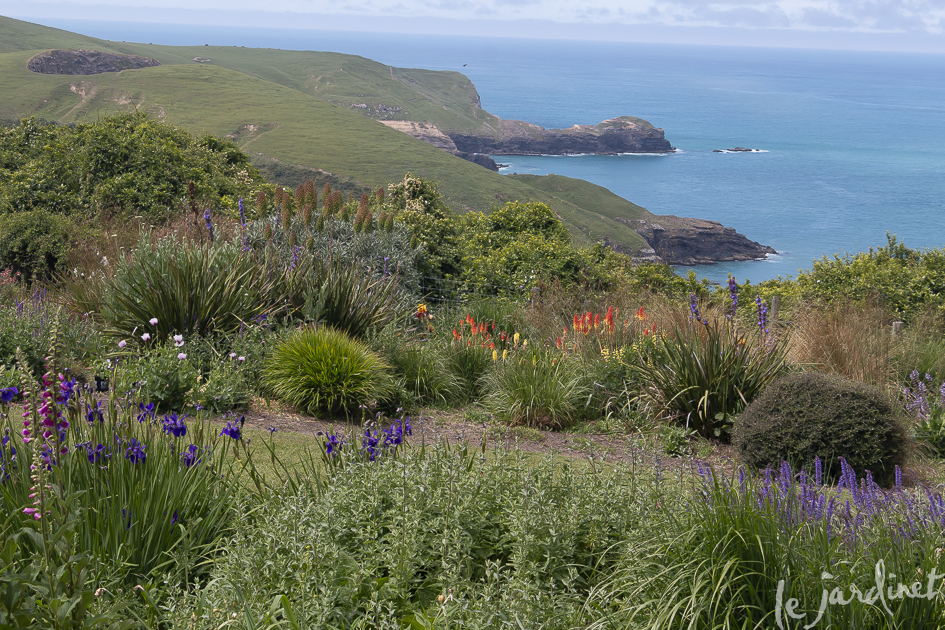
Tucked away down a steep, winding lane near the charming French whaling village of Akaroa, South Island, New Zealand is Fishermans' Bay Garden, home to Jill and Richard Simpson.
Accessing this gem is not for the faint of heart as the homeowners discovered in December 2021 after extreme rain caused the gravel access road to get washed out, forcing them to abandon their car and navigate the treacherous track on foot. For a week afterwards all their supplies had to be dropped in by helicopter while repairs were carried out.
Thankfully my tour group didn't have to approach the garden in such a dramatic 007 style – but we did have to use two smaller coaches which were better able to make the tight turns on the gravel.
Our adventurous group were more than up to that challenge at least, and so we had the opportunity not only to visit a stunning private garden with outstanding views across the coast line but also to glean lots of great ideas that we could implement in our own gardens back in the USA. Here are a few of my favorites.
Scale & Repetition
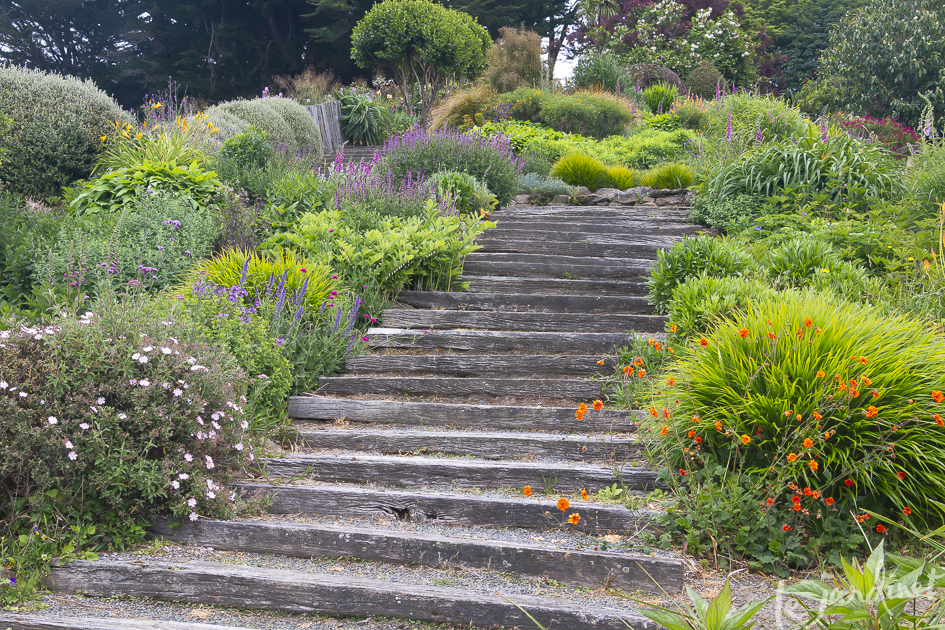
Extra wide steps with a short rise but deep treads encourage visitors to walk side by side at a gentle pace
For a self-confessed plantaholic, Jill could be excused for focusing entirely on planting her favorites old and new, in whatever quantity she happened to find or propogate them. However, the first thing that stuck me was how well Jill had grasped the concept of scale and also of repetition which are both keys to success, especially in a larger space.
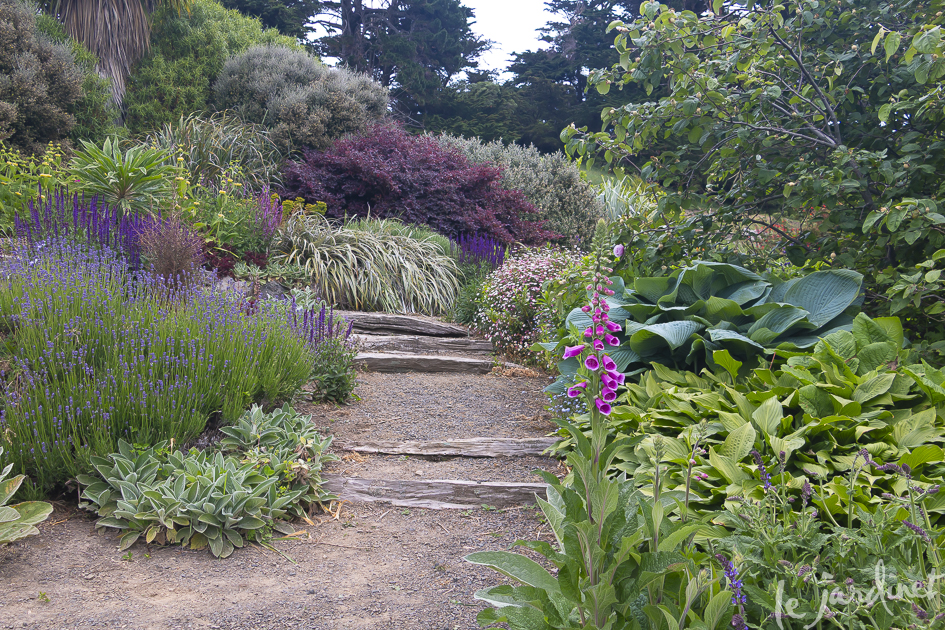
Who would want to rush past this?! The wide path and easy grade facilitates the desire to slow down and take it all in
The steep hillside was traversed by a blend of grass and gravel paths, wide enough for visitors to walk side by side, and any necessary steps shallow enough to be comfortable. Generous landings on the steeper areas encouraged one to pause and take in the view – which was breathtaking in its own right!
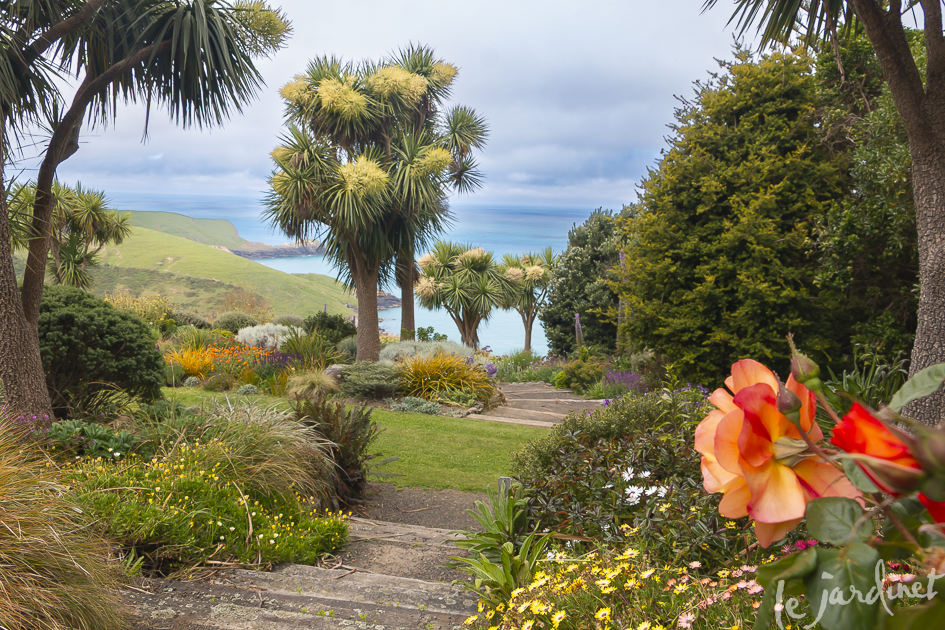
Marching at intervals down the hillside, these cabbage trees appear as large floodlights indicating the way, the ultimate destination perhaps being the tantalizing blue ocean.
Repetition of key plants such as the cabbage tree (Cordyline spp) served as pathway markers, while vast drifts of species helped settle the garden into the land and define boundaries.
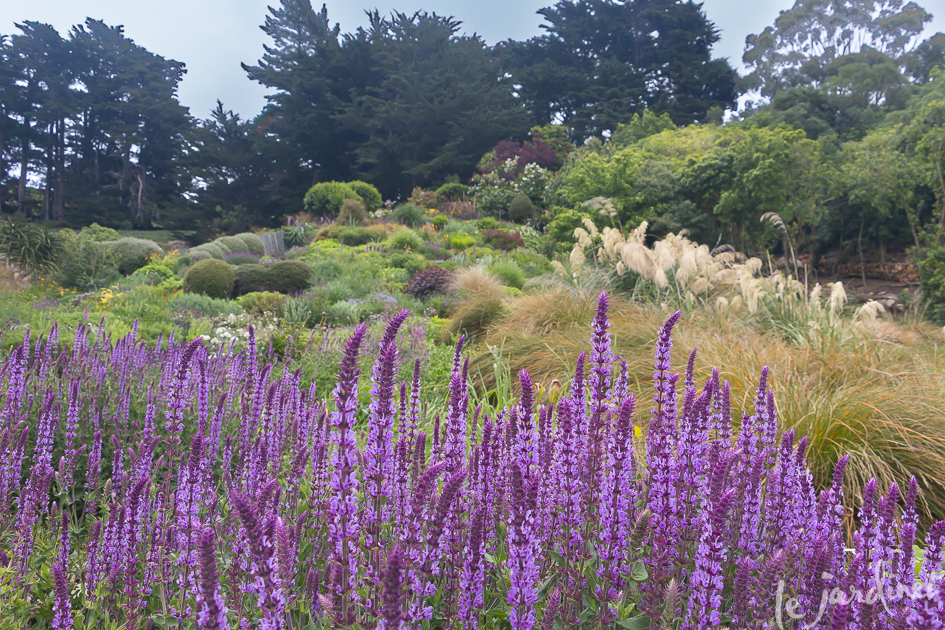
While the central bed has a naturalistic tapestry style planting, the perimeter features extra large drifts of grasses, serving as a calming picture frame.
One of the most recently planted areas is also one of those which I felt elicited the strongest emotional reaction – a naturalistic style planting anchoring the central area of the hillside.
Naturalistic and Practical
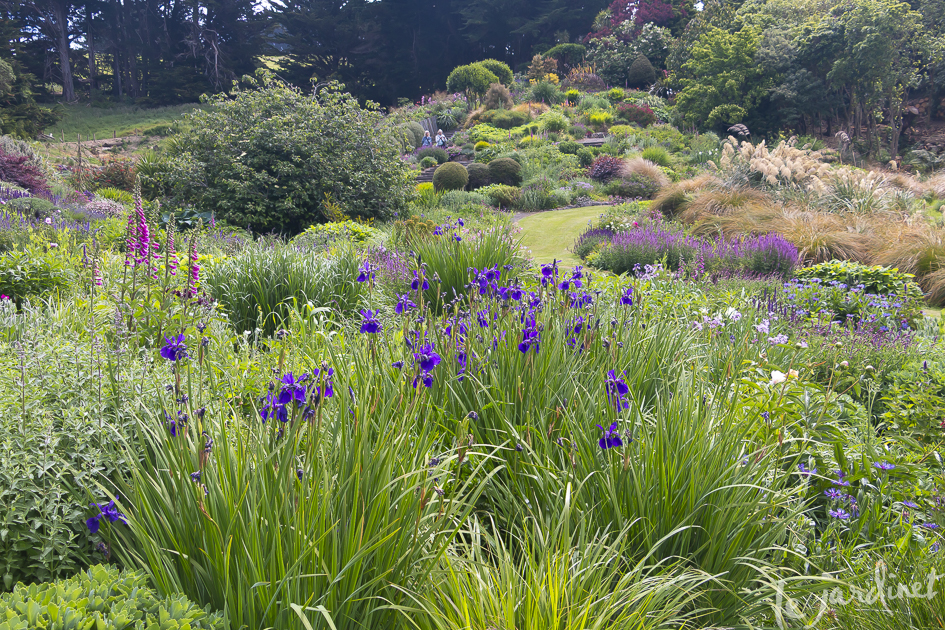
While the heart of the garden is now planted as a naturalistic meadow-style tapestry, Jill has adapted it for both her climate and budget to ensure longevity.
Inspired by Oudolf, Jill gave this a Kiwi twist since "Nothing you do should be exactly like someone else's". There is great wisdom in her statement that we would all do well to heed. Just because something works perfectly in one country/state/part of the garden doesn't mean it will be equally successful everywhere, as Jill found out. The wild storm which wreaked havoc on their access road also washed this section of the garden quite literally into the sea. The native plants of New Zealand that she had focused on were no match for the unexpected torrent. Jill has now added back the toughest of these natives but interwoven species such as Siberian iris which can tolerate wet feet for periods of time.
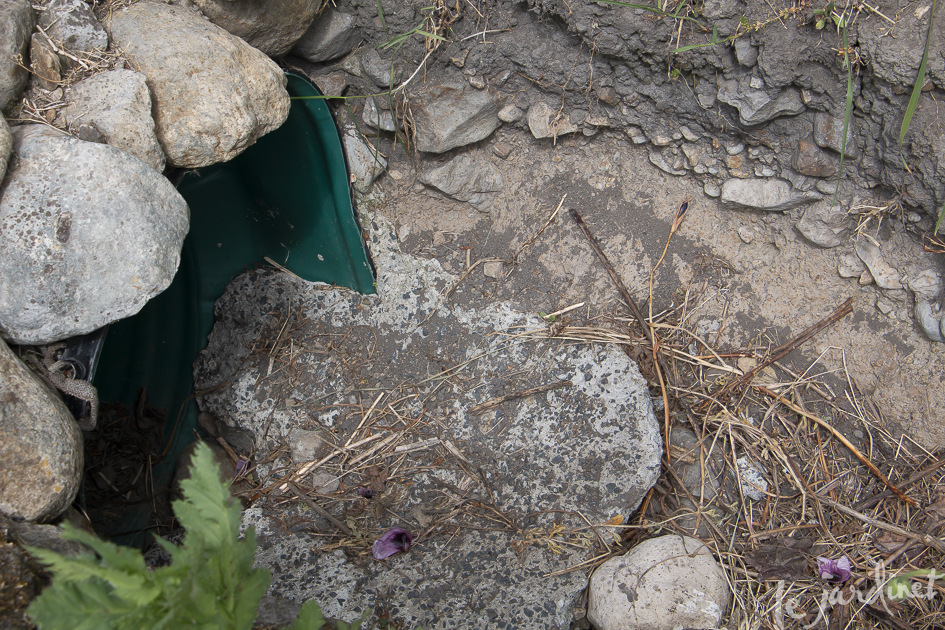 She also added a discreet culvert to divert water should such a weather event happen again.
Adding Softness & Punctuation
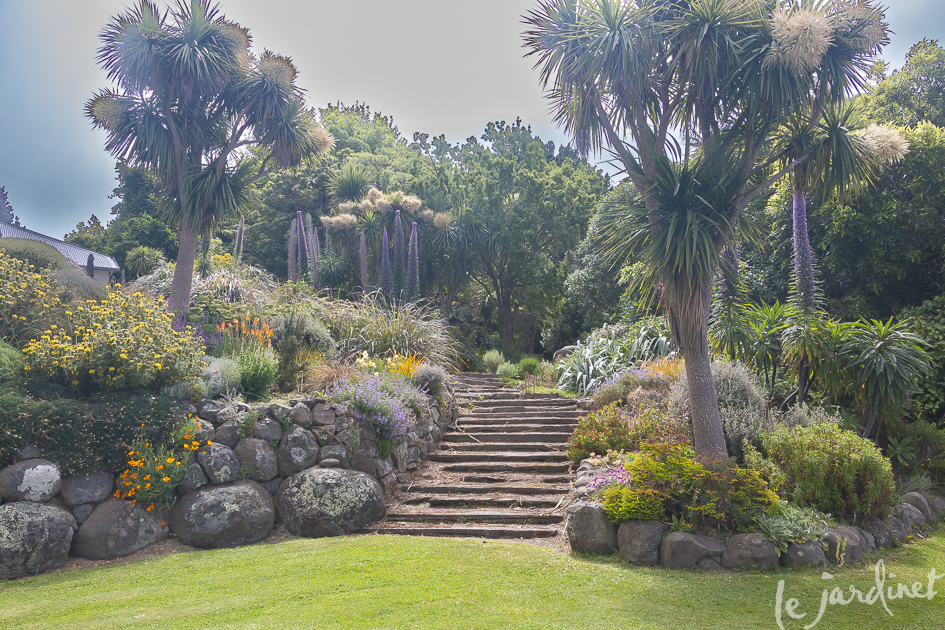
Tall cabbage trees and the vertical punctuation points of Pride of Madeira (Echium candicans) pull the eye from the immense boulders to the sky, while billowing grasses and mounding shrubs add a much needed softness.
Hillside gardens need steps and retaining walls, both of which can be harsh visually. Jill has softened even the largest of these with mounds of soft foliage and flowers.
Additionally, vertical punctuation points help pull the eye upwards, bringing a sense of balance to the scene.

Purple leaved heuchera appear to tumble down the stone wall
Even plants which are not naturally trailing can adopt this habit when planted at the edge of a rock wall while self seeders such as the bright orange Californian poppy can easily root in the smallest crevice.
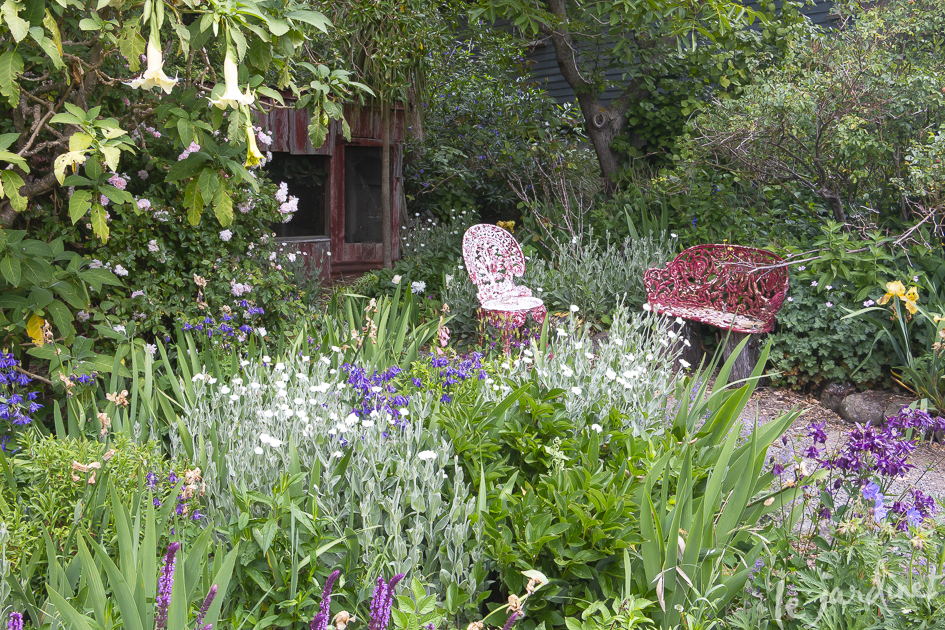 Billowing plantings around a patio space can add a sense of intimacy, giving the impression of sitting within the garden – not on a gravel or stone pad.
Photo Tip
As a tour leader I often find myself juggling my desire (or those of my guests) to get the perfect people-free shot while not appearing rude and jostling them out of the way. Sound familiar? Here's a way to get those photos – and still be a good travel buddy.
1. Get the Big Picture first.
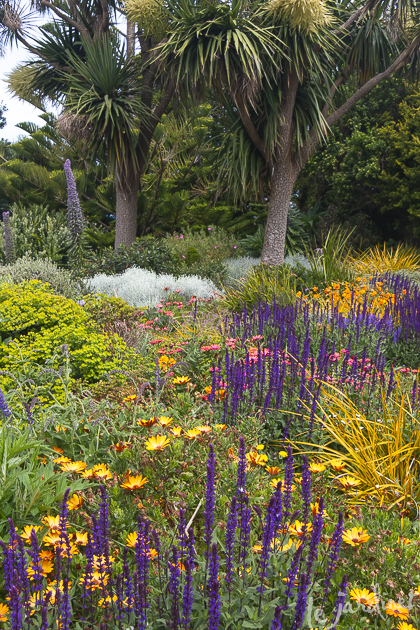
Step 1. Big Picture – the context shot
Yes, it may be that one flower, or bark detail that you really want close up – but start off with a context shot.You'll thank me later – and so will your travel companions.
In the image above the golden yellow and deep blue is clearly a bold and repeating color theme but from this perspective you can also appreciate the role that the cabbage trees play in providing scale and perhaps how the vertical form of the salvia speaks to the trunks of those trees. The strappy cabbage tree leaves echo the spikiness of the golden grass-like plant while the spherical cabbage tree 'flowers' relate to the hummocky forms on the ground plane.
From this distance, everyone can get their shot.
2. Middle Distance
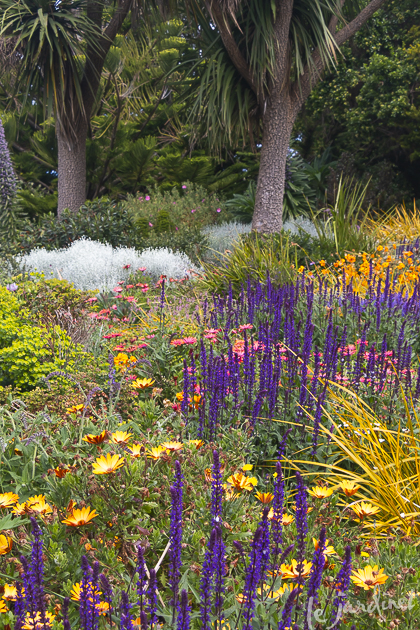
Step 2: the mid-ground
Now either take a step forward or zoom in slightly (The latter will allow more people to also get the photo, however). At this crop, the cabbage tree flowers are eliminated and the focus becomes much more about the flowers and their colors. Repetition is clear but it's still possible to see how the basic planting combo was expanded – and therefore how you might do the same.
3. Now the Close Up
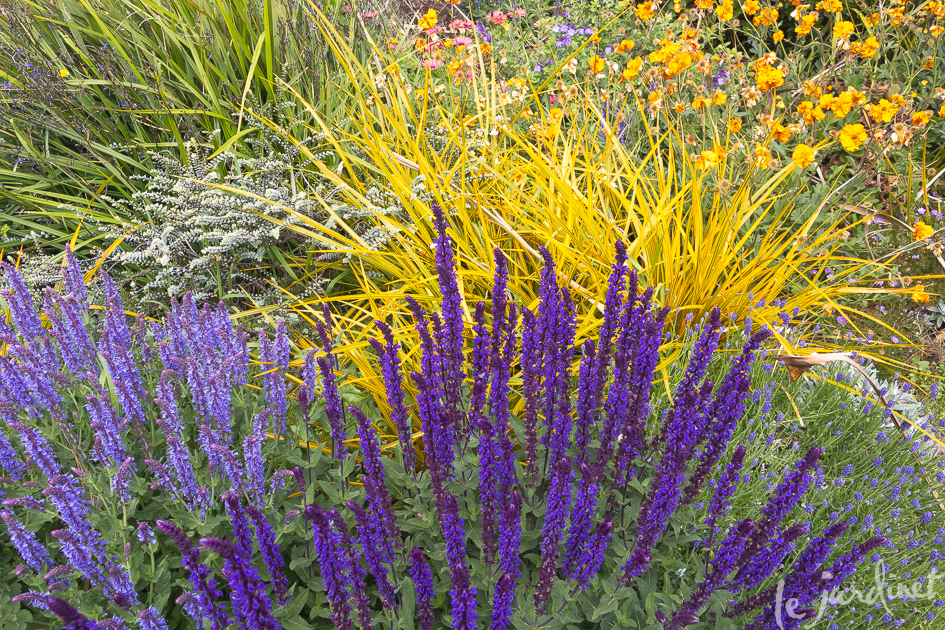
Step 3 – the fine detail
Finally get down low (unless you are photographing ground cover plants) and take the shot you really came for – the electric color combination where vertical flower spikes in blue echo the golden and green blades behind them. An orange geum completes the scene. Yum!
Had I rushed forwards for this photo right away, not only would I have been in everyone else's photo, my solo image wouldn't have told the whole story. Looking back on these images, several months after our visit, I can see details that would otherwise have escaped me.
So take your time, be patient and start by stepping back and zooming out.
When You Just Have to Laugh
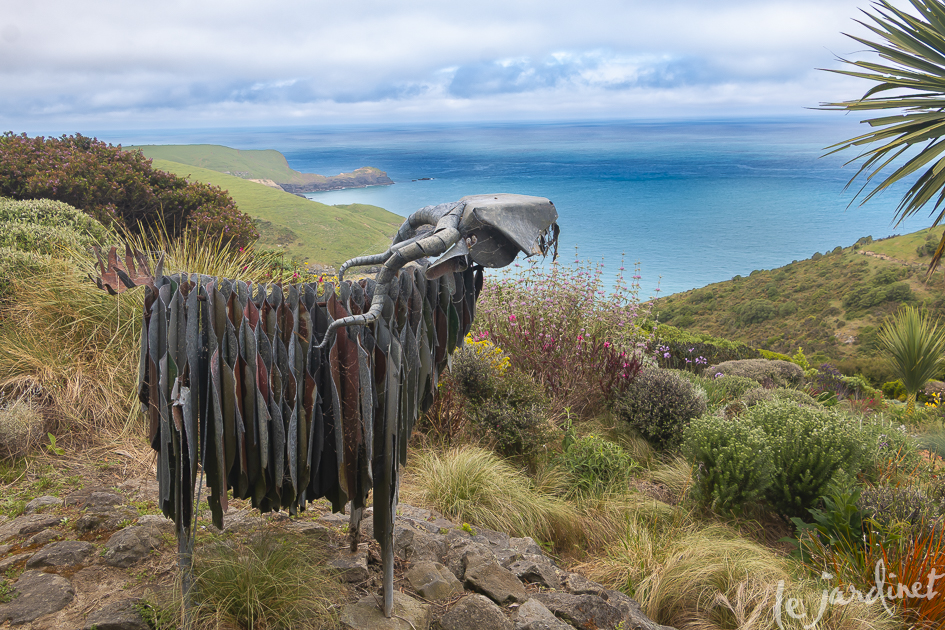
High up on the hillside sits this fabulous sculpture of Marcus the goat
When Richard and Jill purchased this farm in 1997 they also (unintentionally) purchased a lot of tree fern-eating goats. That was a problem since this did not help in the regeneration of the native bush! It took 8 years, but the goats were eventually "removed" – and the tree ferns are thriving once again.
This fabulous sculpture is a reminder of the early days – and happily the only goat remaining today.
Learn More
I have featured several books on my list which include New Zealand gardens. Fisherman's Bay Garden is featured in New Zealand Gardens to Visit.
You're Invited
Sadly, I don't foresee taking future tours to New Zealand – but I am leading an equally exciting tour later this year to Australia and Tasmania: Adventures Down Under is now open for registration and you're invited. There are also some outstanding private gardens on the tour, led by the award-winning designers themselves. Join me!
Subscribe to Receive Blog Posts
Gardening inspiration delivered right to your inbox from Le Jardinet
Disclaimer: this post contains affiliate links which will earn me a few pennies towards my next plant purchase.
Karen, I always look forward to your photography and descriptions. Travel is limited for me these days, yet I cherish the journey you provide through your posts, reflections and insights. Thank you!
I'm so glad to hear you enjoy these posts Mason – thank you for taking time to let me know. Stay tuned for a webinar I'll be offering soon which I think you'll really enjoy. I'll put details in my newsletter as well as my website and on FB 🙂
Thank you for sharing this stunning garden with us. Almost made me feel like I was there. Why will you not be leading tours to New Zealand in the future?
Aww thanks Kristy -that's a lovely compliment.
I'd love to return, but I'm already 65 and have several years of future tours penciled in already for Europe and South Africa. I'm not sure at what point organizing and leading these longer haul tours will be more than I can give my usual 150% to.
The garden details look so inviting. Did you find any specific spots that worked best for photos?
Great question. For landscape photography in general I start by looking for the light – and usually shoot into it in order to get backlighting on translucent foliage, or side lighting for sparkle. Hillside gardens are great fun as it forces the perspective nicely whether by shooting up or down the grade.
I think some of my most emotive shots from this visit were taken looking down the hill and out to the ocean. But honestly it would be hard to take a bad photo here – it's fabulous!
[…] essay: Fisherman's Bay Garden – A Treasure Trove of Ideas (Karen Chapman/Le Jardinet) Another lovely garden (in New Zealand) to virtually visit and perhaps […]