Garden Chapters Unified
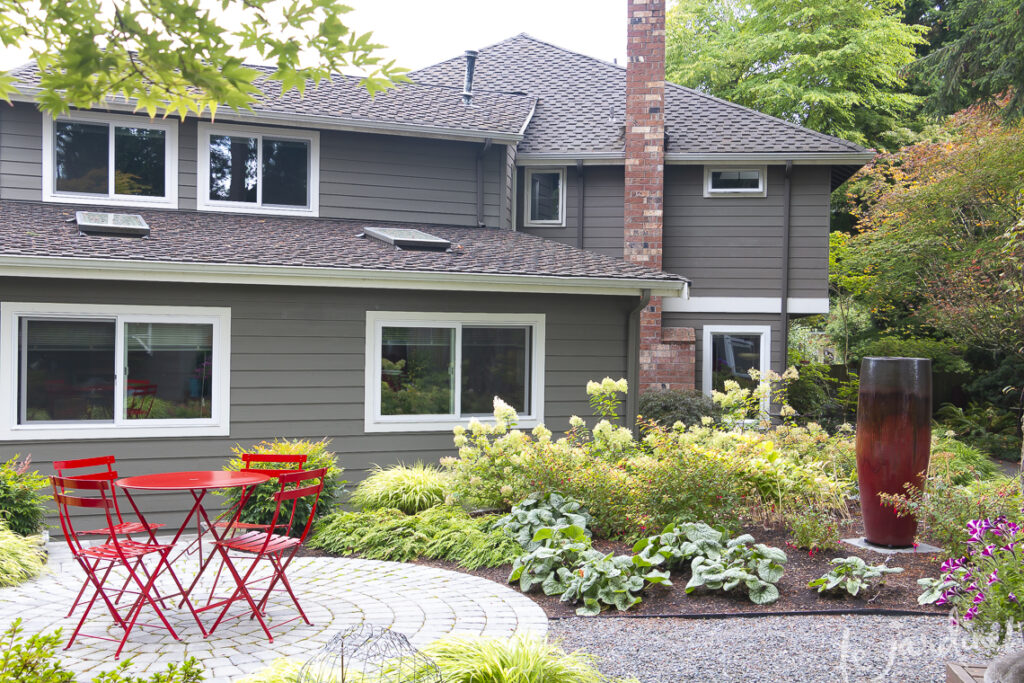
In this mini-design series of "telling your garden story" we've looked at the introduction (the entry sequence) and ideas for an overall theme. Today I want to explore ways to help you strengthen your narrative by unifying the inddividual garden chapters using repetition.
There's a balance between allowing each distinct garden area have its own personality (e.g a shaded woodland garden, a tropical poolside garden, a sunny drought tolerant bed) and creating a flow between each space. To keep with the story allegory, the aim is to avoid your landscape reading like a collection of short stories and more of a series with familiar key characters continuing to appear.
Repetition of a Plant
Choose something that isn't too pricey and is more of a supporting character than the star for this role. Something that can be used in a variety of lighting conditions is ideal, even better if this is typically placed towards the front of a bed as the eye will easily find it and follow it around the landscape.
Japanese Forest Grass – example 1
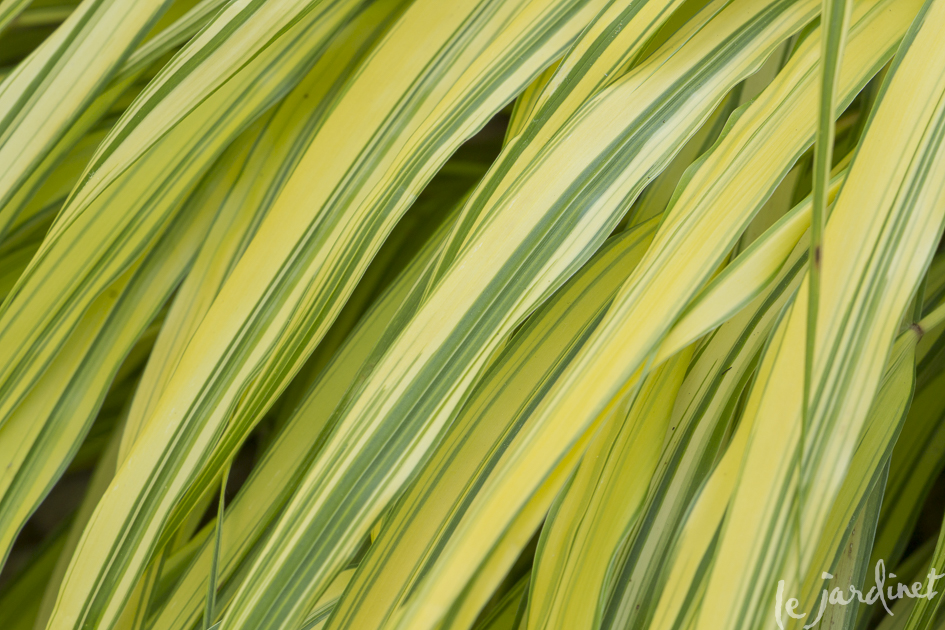
Japanese forest grass (Hakonechloa macra 'Aureola') – a personal favorite
I'm a huge fan of Japanese forest grass (Hakonechloa macra) and use the green and yellow variegated 'Aureola' extensively in my own garden as well as client designs. It creates a soft, mounding waterfall of foliage that naturally catches the eye without screaming "Look at ME!" It is ideal for shade/partial shade gardens but will also tolerate full sun, at least in the Pacific Northwest if it is watered regularly, so has the ability to knit together areas of the landscape with differing light conditions. Several other varieties are also available besides Aureola shown above including All Gold, Beni Kazi, Albo Striata and Naomi.

Massed groupings of Japanese forest grass in the shaded Ruin Garden at Chanticleer
From a practical perspective it is often available in both gallon and quart size pots making it reasonably affordable, and of course like all perennials it can be divided every 3-5 years if you wish to do so, thereby generating more plants for free. It is hardy in zones 4-9 , gets rosy fall tints and the bleached winter foliage can be left in place until early spring when a gentle tug or chop will remove them and allow new growth to shine.
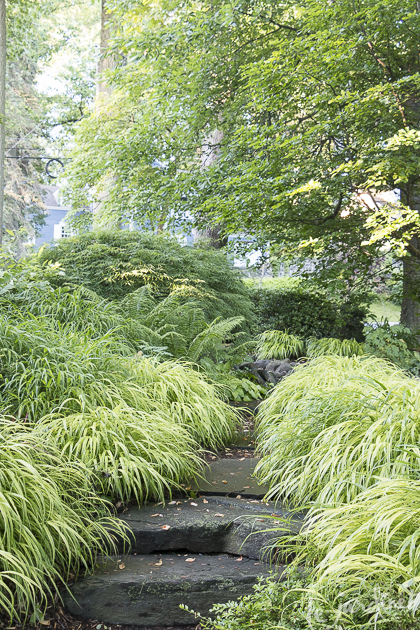
Japanese forest grass used to line and soften a stone, stepped pathway. Design by Susan Cohan
A mature clump of this grass can reach 3 feet wide and 2 feet tall in just a few years making it a perfect understory to limbed up shrubs or at the front of a border. I also like to use it alongside pathways, in containers and to soften retaining walls. I should point out that it grows to that size here in the Greater Seattle area – but sources often state it to be smaller.
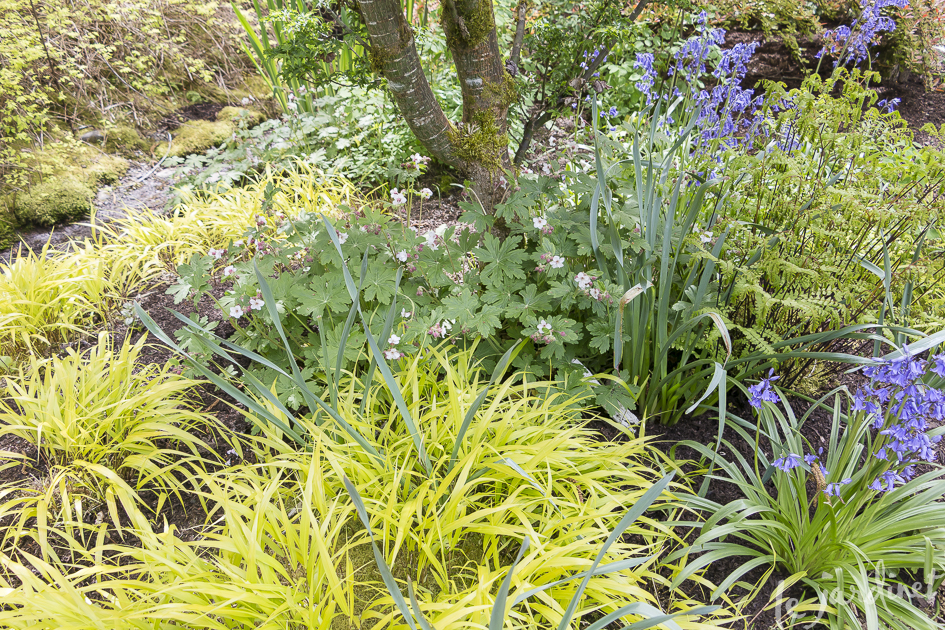
All Gold Japanese forest grass shines in the spring woodland garden
With so many design options it's easy to see how you could use it in different parts of your garden: under a deciduous tree, to line your front walkway, to frame a sunny patio, to act as a carpet beneath a tall container or as a solo planting in the container itself.
It works equally well in a traditional design, a Japanese-style garden, a contemporary layout and more.
Carpeting forms of Wormwood – example 2
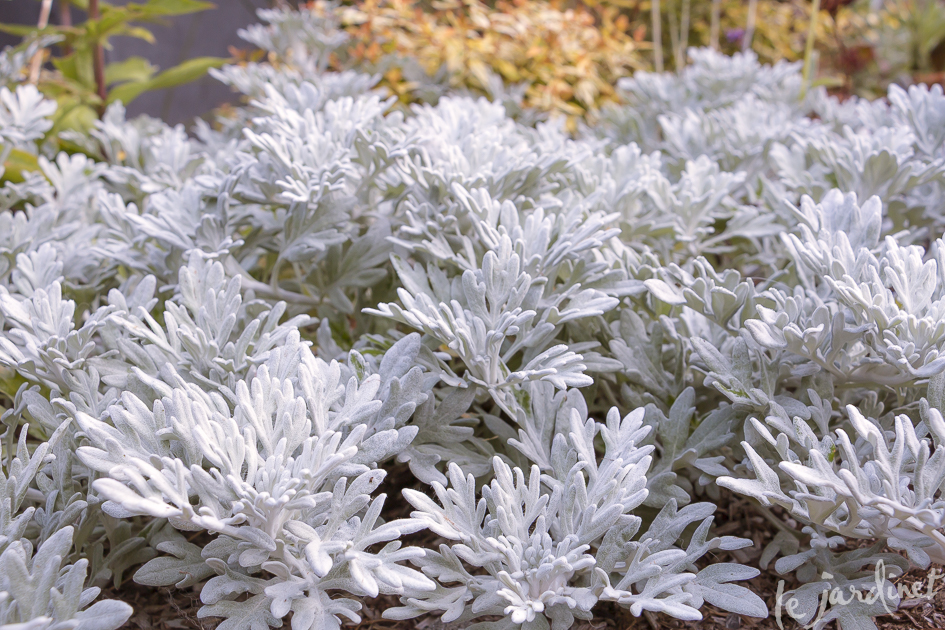
Silver Bullet is an annual form of wormwood by Proven Winners
When beds are newly planted they often benefit from an inexpensive ground-hugging annual or perennial to knit the elements together. But this idea can be extended to act as a repetition between beds or garden areas. I have found that for long-lasting impact it is best to rely on foliage plants for this particular role.
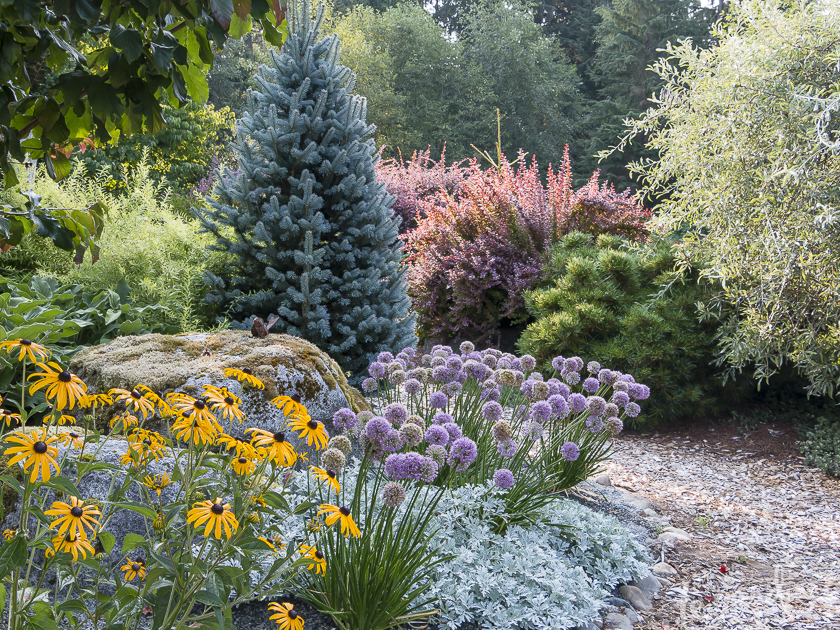
My deer-resistant, drought tolerant garden border edged with Silver Brocade wormwood
I love the bright, silvery, felted foliage of Silver Brocade wormwood (Artemisia stelleriana 'Silver Brocade') and can often find it in late spring in a 4" size – sometimes even a 2" basket stuffer size which makes it very affordable – be sure to shop around and check your local nurseries. In my winter-wet soils the perennial forms can be short -lived without improving drainage but there are some great annual options available also.
All species of artemisia need full sun, well drained soil and many are hardy in zones 3-8 (but check the label).
Repetition of a Color
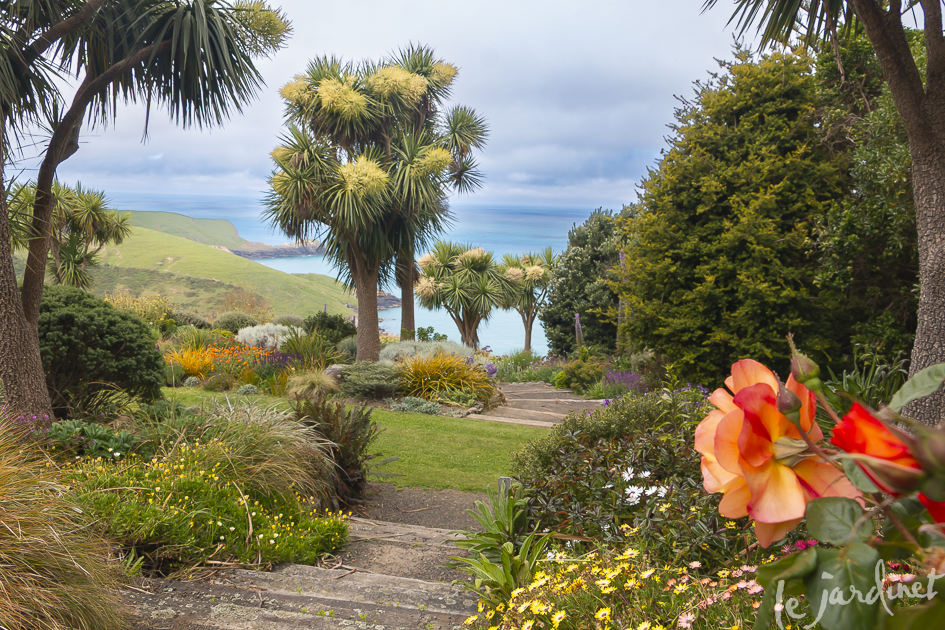
Fisherman's Bay Garden New Zealand: repetition of the tall cabbage trees (Cordyline) clearly defines the path, but repetition of gold and orange foliage and flowers also draw the eye through the space.
When you can't find the perfect plant that will thrive in all your different garden areas, it is time to repeat a key color instead.
For example if you liked the silver wormwood for your sunny areas, you could choose a silver Japanese painted fern, or one of the silver Siberian bugloss (Brunnera macrophylla e.g. Jack Frost) in your shade gardens. If you need something with more height for full sun, consider the stunning Iceberg Alley Sageleaf willow as a mid-sized shrub or the weeping silver-leaf pear if you need a specimen tree.

By repeating orange tones in the (borrowed view) of foliage, a bench cushion and flowers, Carol Ager created a welcoming vignette but went on to repeat the orange in different ways throughout her garden.
When playing with color you can extend the range from foliage to include flowers, art, patio cushions or containers.
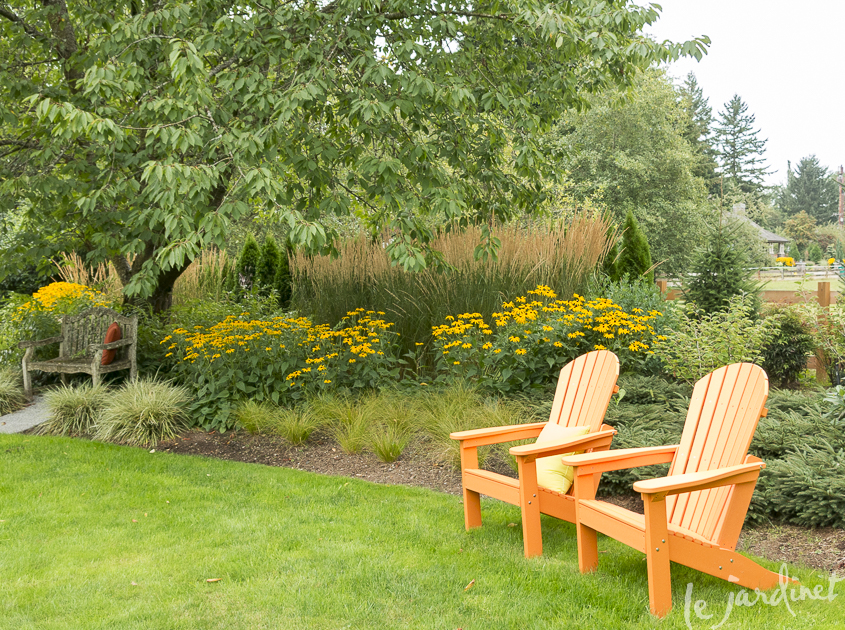
Carol Ager continued her orange accents with the adirondack chairs, dark rust throw pillow and even the plumes on the tall Karl Foerster grass have an orange hue.
Want to Learn More?
 I get so many ideas from other peoples gardens, don't you? When we learn to get past the "what is it and can I grow it?" question we can begin to discern design ideas no matter where we are. Be sure to check out Garden Conservancy open days and local garden tours for fun day trips. If you're in the United Kingdom, the National Garden Scheme is a fabulous resource for open gardens which support various charities.
If you've a bit more time on your hands and want to explore some truly outstanding private gardens as well as world-class public gardens, I still have some room on my Adventures Down Under: Australia and Tasmania this fall. Check out the itinerary, read reviews from my previous tour guests then get in touch to secure your spot.
Subscribe to Receive Blog Posts
Gardening inspiration delivered right to your inbox from Le Jardinet
Excellent design concepts! Layout is easily read and attainable.
Thanks so much for the positive feedback
Oh, I love that summer view of your deer-resistant garden border! Absolutely drool worthy. I'm going to consider that Artemisia 'Silver Brocade'… such a good color/ground cover.
Thanks Chavli! I really love using that artemisia in the garden. I cut off any flower spikes to keep it nice and tidy. The advantage of the annual version is that it rarely if ever flowers – but the $ of course is more.